

Compare credit cards bywhat they earn, what they cost, the sign-up bonus, the interest rate, the balance transfer, the overseas fee or interest-free days.
Points, fees and interest pull in different directions. We price every card on the spend you enter.
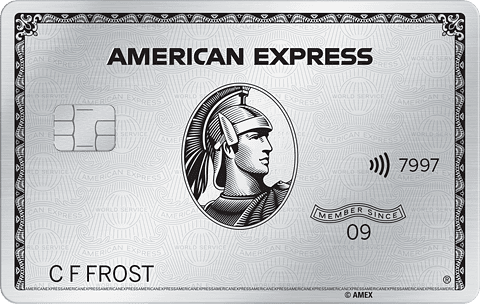


Photo: freestocks.org
Top credit cards in Australia right now
Every leaderboardAs of 2 November 2026, the largest sign-up bonus tracked by BankMate is 300,000 points on the American Express Platinum Card.
Largest Sign-up Bonus Credit Cards
- 1American Express Platinum CardAmerican Express300,000pts

- 2NAB Travel CardNAB180,000pts

- 3Qantas Money Titanium Credit CardQantas Money150,000pts

Lowest Rate Credit Cards
- 1Westpac Lite CardWestpac9.90%p.a.

- 2American Express Low Rate Credit Card from American ExpressAmerican Express10.99%p.a.
- 3BCU Classic Credit CardBCU11.95%p.a.


Sign-up bonuses that changed this week
- Bank of Melbourne Amplify Rewards SignatureBank of Melbourne90,000 ptsDown from 200,000 pts · 30 Oct
- BankSA Amplify Rewards PlatinumBankSA50,000 ptsDown from 100,000 pts · 30 Oct
- Bank of Melbourne Amplify Qantas PlatinumBank of Melbourne30,000 ptsDown from 100,000 pts · 30 Oct
- Westpac Altitude Qantas PlatinumWestpac50,000 ptsDown from 100,000 pts · 30 Oct
- St George Amplify Qantas SignatureSt George60,000 ptsDown from 150,000 pts · 30 Oct
- BankSA Amplify Rewards SignatureBankSA90,000 ptsDown from 200,000 pts · 30 Oct
What people are saying
Common questions
By what a card costs and earns on your own spending. The parts are the annual fee (and any first-year discount), the rewards your spending earns, the sign-up bonus less the first-year fee, interest on any balance carried, and fees on overseas purchases. They pull in different directions, so BankMate adds them up in dollars for each of the 100+ cards it lists, on the monthly spend you enter, and ranks them on the figure the list is sorted by.
Australian cards quote interest as a rate a year (what US sites call APR). On the cards BankMate lists, purchase rates run from about 10% to about 29% a year, and most charge 19% or more. Low-rate cards sit at the bottom of that range and mostly earn no points. A few cards charge no interest and a monthly fee instead. Cash advances are usually charged interest from the day they're made, with no interest-free days.
It turns on how much goes on the card and whether the balance is paid in full each month. A card earning 1 Qantas point per $1 on $2,000 a month earns 24,000 points a year, about $192 at the 0.8 cents BankMate values them at, against annual fees that commonly run $100 to $450 on rewards cards. A balance carried at 20% a year costs $200 a year for every $1,000 owed.
It depends on the program. BankMate values a bank's own points at the rate of a gift card from its rewards store, about 0.2 to 0.5 cents a point, so $2 to $5 for 1,000. Qantas and Velocity points are valued at 0.8 cents on flights, $8 for 1,000. Each card's figures use its program's value, and the working beside them names the redemption it comes from.
A card that pays back a share of what you spend as a credit on your statement, instead of points. BankMate counts cashback in dollars as it's paid and turns points into dollars at their program's value, so cashback and points cards sit on one scale.
Spend a set amount on the card within the first few months, commonly $3,000 to $10,000, and often be new to that issuer's cards. Many bonuses are paid in two parts, the second after 12 months or more, so they can span two years of annual fees. BankMate shows each bonus less the first-year fee, and its monthly Card report records every change to bonuses, fees and earn rates.
On the cards BankMate lists, 0% balance transfer periods run from 6 months to about two years, and many charge a one-off fee on the amount moved. Whatever is still owing when the period ends is charged the card's revert rate, commonly around 20% a year or more. On many cards, new purchases get no interest-free days while any transferred balance is left.
Only while the balance is paid in full and the card isn't used overseas. A card with no annual fee still charges interest on a carried balance, and most of those BankMate lists charge 3% or more on purchases in another currency. Fewer of them earn points than cards with a fee.
Most cards BankMate lists charge 3% to 3.5% of each purchase made in another currency, which can include online purchases from overseas sellers. Some charge no fee at all. Cash taken out overseas is usually a cash advance, with its own fee and interest from the day it's taken. Given what you spend overseas a year, BankMate counts the fee in each card's cost.
No. Browsing and comparing cards on BankMate involves no credit check. A check is made when you apply for a card, and the application shows on your credit report whether or not it's approved.